At A Glance
Role: Solo creative: concept, paper art, graphic design, motion design
Client: The Philadelphia Cricket Club
Deliverables: 1 animation per club location- St Martins (~8:40 min), Flourtown (~2:40).
Medium: Hand-crafted paper (Neenah) & stop-motion
Scale: 90 individual paper garments made by hand, 7 unique 3D paper background sets
Context
The Philadelphia Cricket Club is the oldest country club in the United States. Like a lot of institutions with long histories, they had a dress code, and a nuanced one, that members and guests were expected to know and follow. The challenge wasn't that the rules were complicated. It was that communicating them felt, well, like communicating rules.
They came to me wanting something different: an animated video to live on screens inside the club and across their social channels. Something that informed without lecturing. Something people might actually enjoy watching.
The Work (or play)
The club operates across two distinct locations: a full clubhouse with multiple venues and activities, and a second location centered around the golf course. I was tasked with making an animation for each, a roughly 9-minute piece covering the full range of the main clubhouse, and a focused 2:30 piece for the golf course location.
The difference in runtime isn't padding. It reflects the actual scope of each space. One is a full club with dining, courts, and events. The other is a golf course. The videos are sized to match.
The Approach
Paper. Specifically, hand-crafted paper clothing, traced from photo references, cut into layers, and assembled into garments that could be photographed piece by piece and animated in a stop-motion style.
The medium did a lot of the heavy lifting. There's something inherently playful and approachable about paper art, and for a subject like dress code, where the tone could easily tip into stuffy, that mattered. The goal was to make members smile while they learned, and give guests something worth watching while they waited.




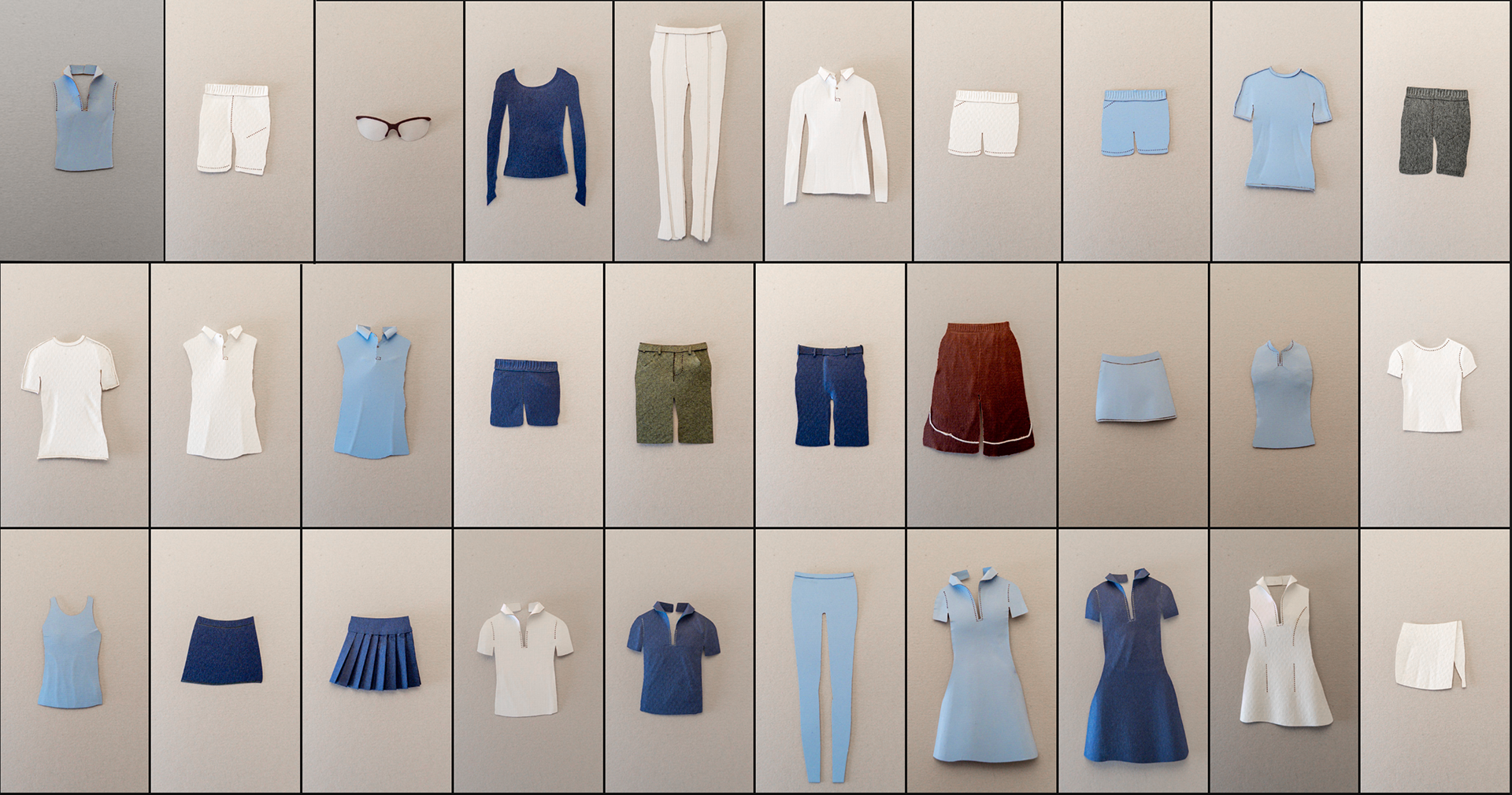
90 Paper Garments & Accessories
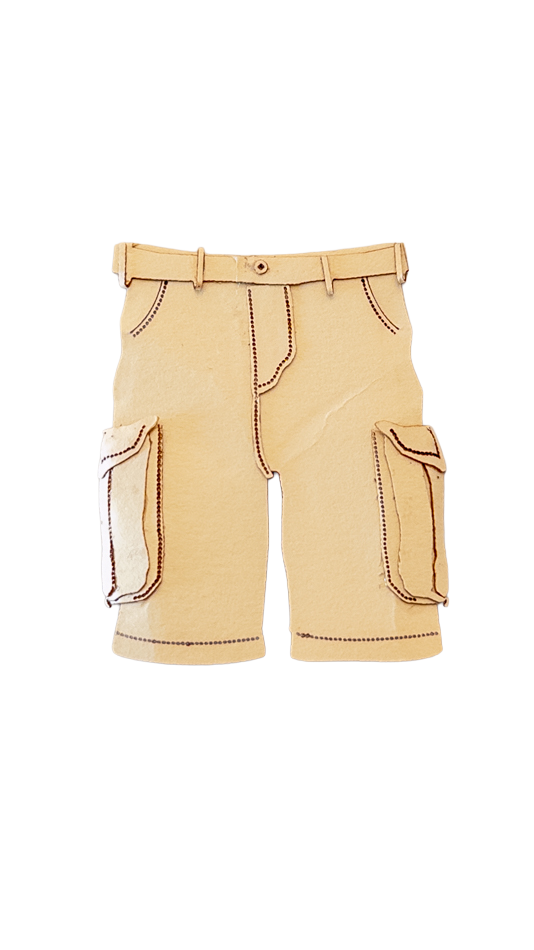
Every garment in both videos was cut by laser and crafted by hand: shirts, trousers, shorts, shoes, hats. One piece for nearly every item referenced across both locations and activity contexts. Each started as a photo reference, was traced and deconstructed into layers, then assembled and embossed to create subtle wrinkles and folds.

Process - One Pair of Pants
Every garment followed the same logic. Starting from a photo reference, trace the silhouette, identify the natural seams and folds, then cut those into separate layers. Assembling them gives each piece a little depth, shadow, and dimension, so it reads as clothing rather than a flat cutout. The pants are a good example of how much problem-solving goes into something that, in the final video, just looks like a pair of pants.


The Sets:
The backgrounds weren't generic interiors and exteriors. Each set was built to represent a specific location within the club, spaces members would actually recognize. Several had rotating or swappable elements so the same set could read differently across scenes. Each one was filmed to serve as a subtle but dynamic backdrop, completing the experience of viewing the outfit and understanding what is or isn't allowed.


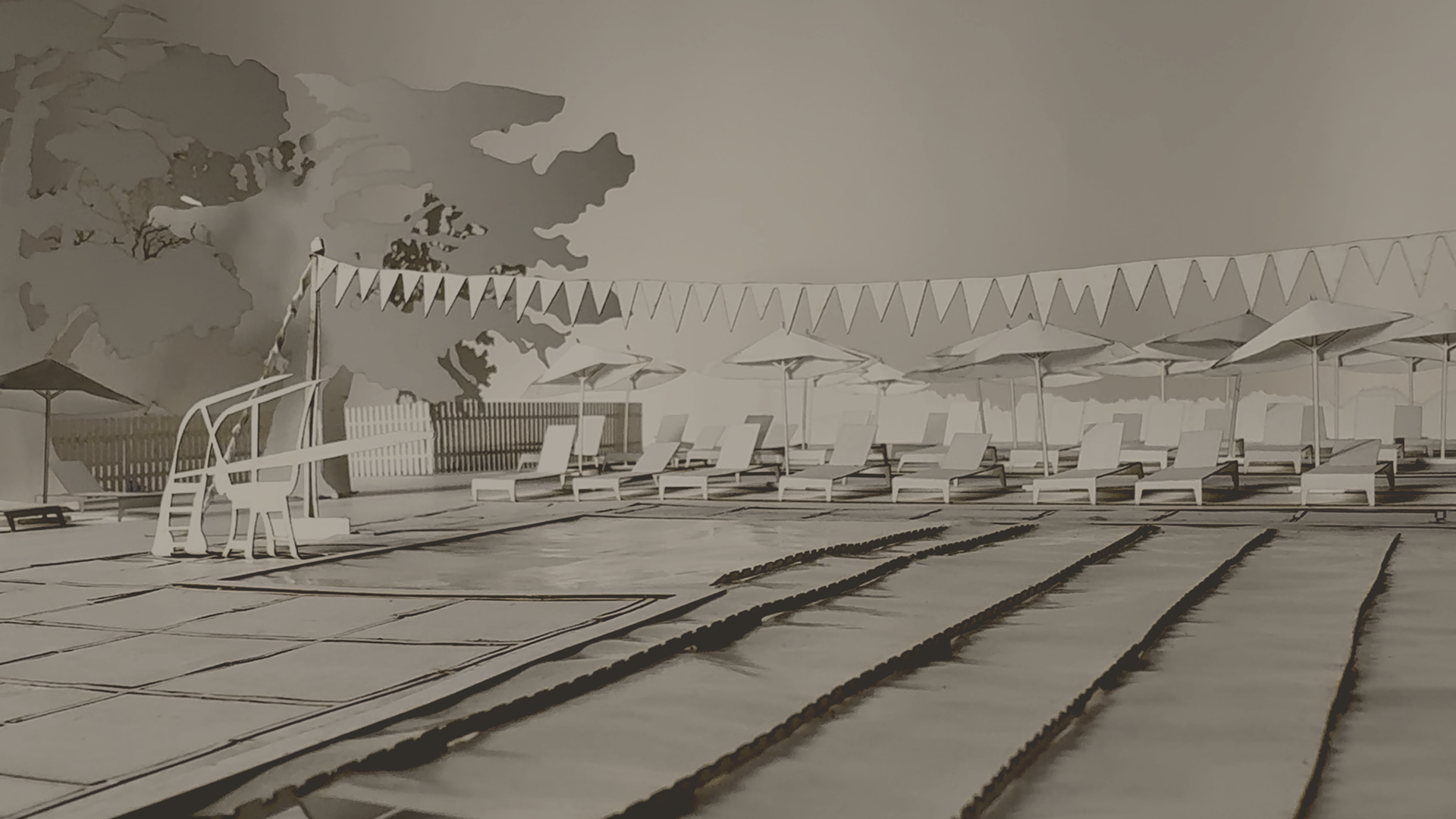

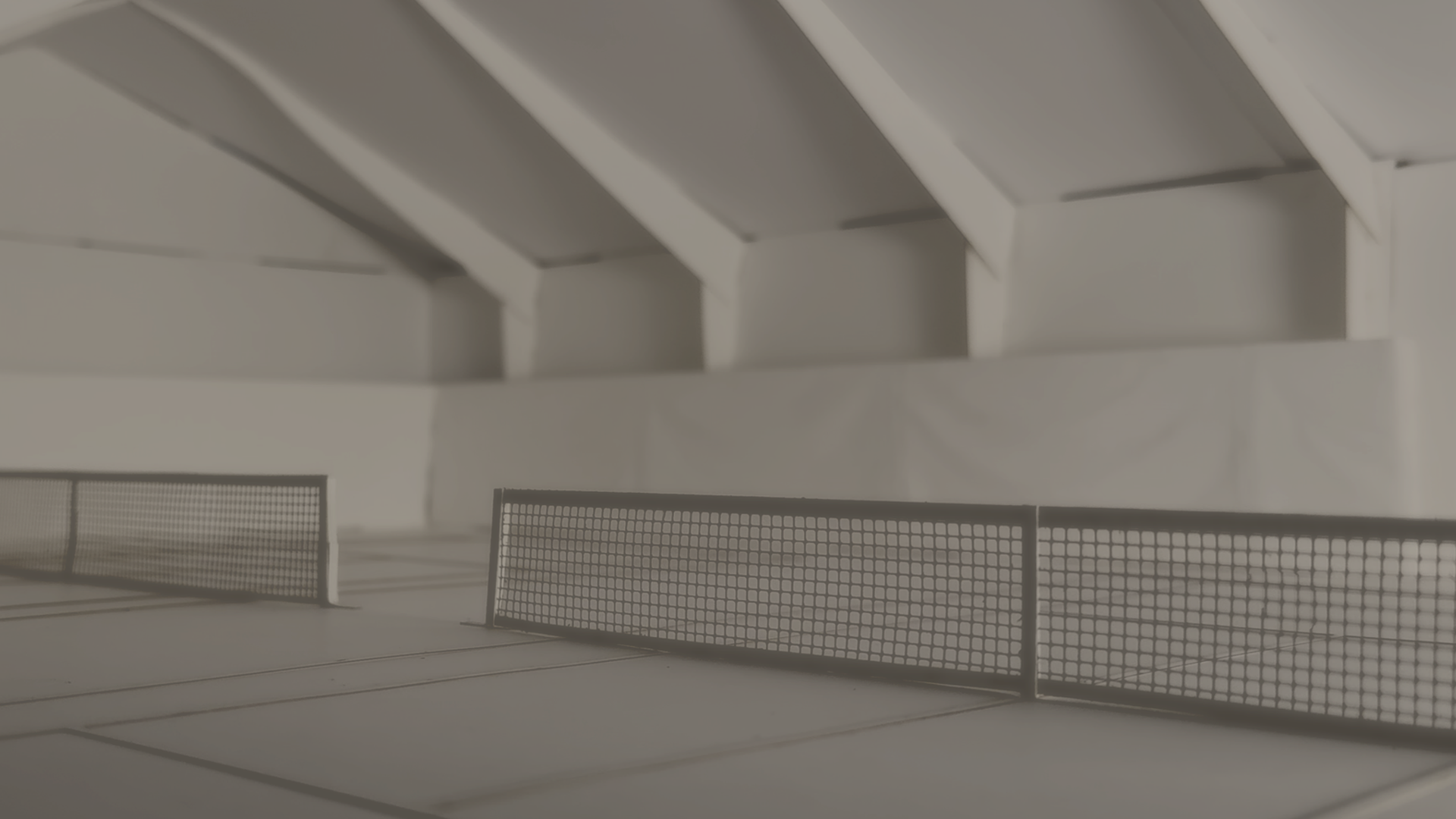

Still frames of the background videos for each scene.


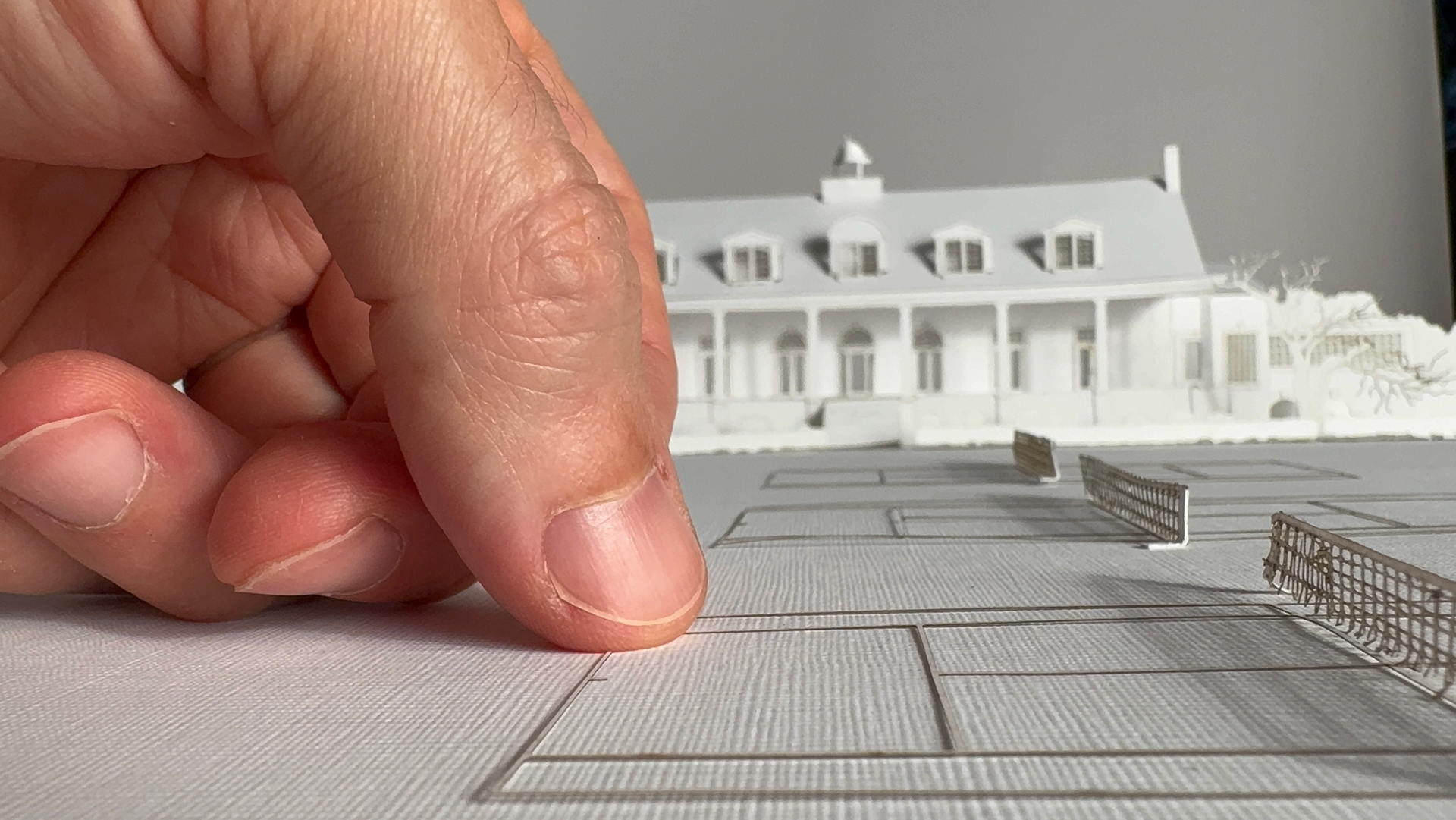

Behind the scenes photos of the pool and outdoor tennis backgrounds.
RESULT
What started as a dress code video became something closer to a small production studio's worth of work, compressed into one person's hands. Ninety garments, cut, folded, and shot one at a time. Seven sets built to feel like somewhere... specific enough that a member would recognize them, considered enough that a stranger would want to, rendered in the same hand-made language as everything else. For a 130-plus-year-old institution, that felt like the right note: something that takes its history seriously without taking itself too seriously.